Sanchica Panza
Don QuixoteSanchica Panza is the daughter of Sancho Panza and Teresa Panza, and her brief appearance gives the family’s hopes of advancement a vivid, domestic scale. News that her father has become governor reaches her village through a page sent by the Duchess. Sanchica greets the report not with solemn deference but with questions about seeing her father, sharing the gifts, and what a governor might wear. Her directness makes her more than a passive recipient of family news: she helps reveal how a promised rise in rank lands among the people who must imagine and live with it.
Family and First Appearance
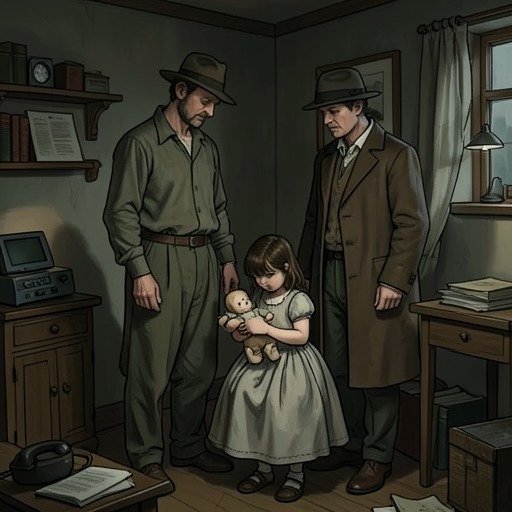
The page encounters Sanchica while women are washing clothes in a brook. When he asks for Teresa Panza, Sanchica identifies herself as her daughter and confirms that Sancho is her father and Don Quixote is their master. She leaves the washing to a companion and hurries ahead of the page’s horse to guide him home. At about fourteen, she is described as bare-legged and bareheaded, with her hair hanging loose; the details place the arrival of courtly news against the ordinary work of her household.
At home, Teresa is distressed by the long silence from Sancho. The page presents a letter from her husband and a string of coral beads sent by the Duchess, and Sanchica immediately suspects that Don Quixote has finally secured for her father the governorship or county he had often promised. The page confirms that Sancho governs Barataria, though he describes the place as a town of more than a thousand inhabitants. The family’s astonishment is therefore mixed with uncertainty about what the title means and what kind of place Sancho rules.
Gifts, Status, and Family Ambition
Sanchica’s response to the coral beads turns the news of advancement into a small negotiation within the family. She asks for half the string, reasoning that the Duchess could not have intended the entire gift for her mother alone. Teresa says the beads are all for Sanchica, though she wants to wear them herself for a few days because they gladden her. The present passes between mother and daughter as both a sign of favor from above and a source of immediate household pleasure.
The page brings another gift: a fine suit of cloth that Sancho had worn once, on a hunting trip, and now sends for his daughter. That clothing prompts Sanchica to wonder whether her father wears trunk-hose as governor. She says she has long wanted to see him dressed that way. The comic image of a daughter picturing her father in fashionable clothing makes rank tangible: the abstract office becomes a change she can try to visualize in his appearance. The suit also gives the family’s new status a material form, even as its secondhand origin keeps it connected to Sancho’s everyday life.
Seeing Her Father for Herself
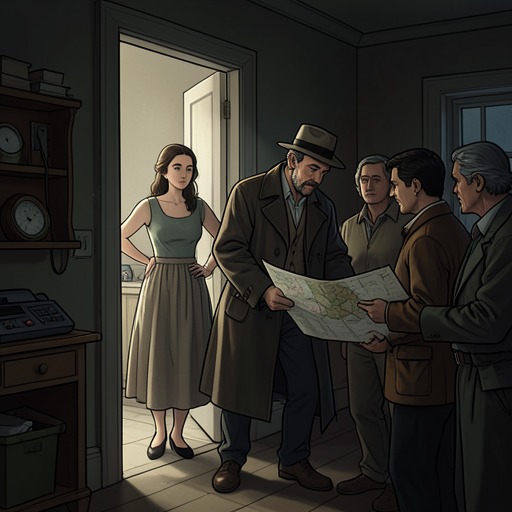
When Samson Carrasco and others question the page about the governorship and the supposed island, Sanchica enters with her skirt full of eggs and asks to travel with him so she can see her father. Her eagerness makes firsthand sight more persuasive to her than the adults’ doubts about the report. The page says a governor’s daughter should not travel alone, but with coaches, litters, and many attendants. Sanchica answers that she can ride a she-ass just as well as travel in a coach. She accepts neither the need for elaborate ceremony nor the assumption that a change in her father’s rank must alter her own practical habits.
Teresa rebukes her and observes that behavior and forms of address should change with a person’s station. The page endorses the distinction between Sancho as a squire and Sancho as governor, while Sanchica’s readiness to go by donkey exposes the distance between official expectations and her own plain solution. The page then asks to be fed and says he intends to return that evening. Sanchica’s wish to accompany him is recorded, but the account does not show her making the journey or reuniting with her father.
Character and Narrative Role
Sanchica is presented through quick, concrete exchanges rather than an extended account of her life. She identifies her family without hesitation, takes an active part in receiving its news, and moves readily from astonishment to questions about gifts, clothing, and travel. Her skirt full of eggs and her proposed ride on a she-ass keep practical domestic life in view even as a governorship seems to open the prospect of gentility.
Her brief scene also balances aspiration with uncertainty. Sancho had once treated Christian ancestry as sufficient to qualify for a count’s title, and the new report makes his promised social rise feel possible to his household. Yet Sanchica does not simply adopt the page’s picture of a governor’s daughter surrounded by attendants. She wants to see her father, and she is prepared to travel in the ordinary way. Through her, the news of Sancho’s elevation is measured not only by titles and clothes but by the family’s immediate reactions and the familiar habits that remain in place.